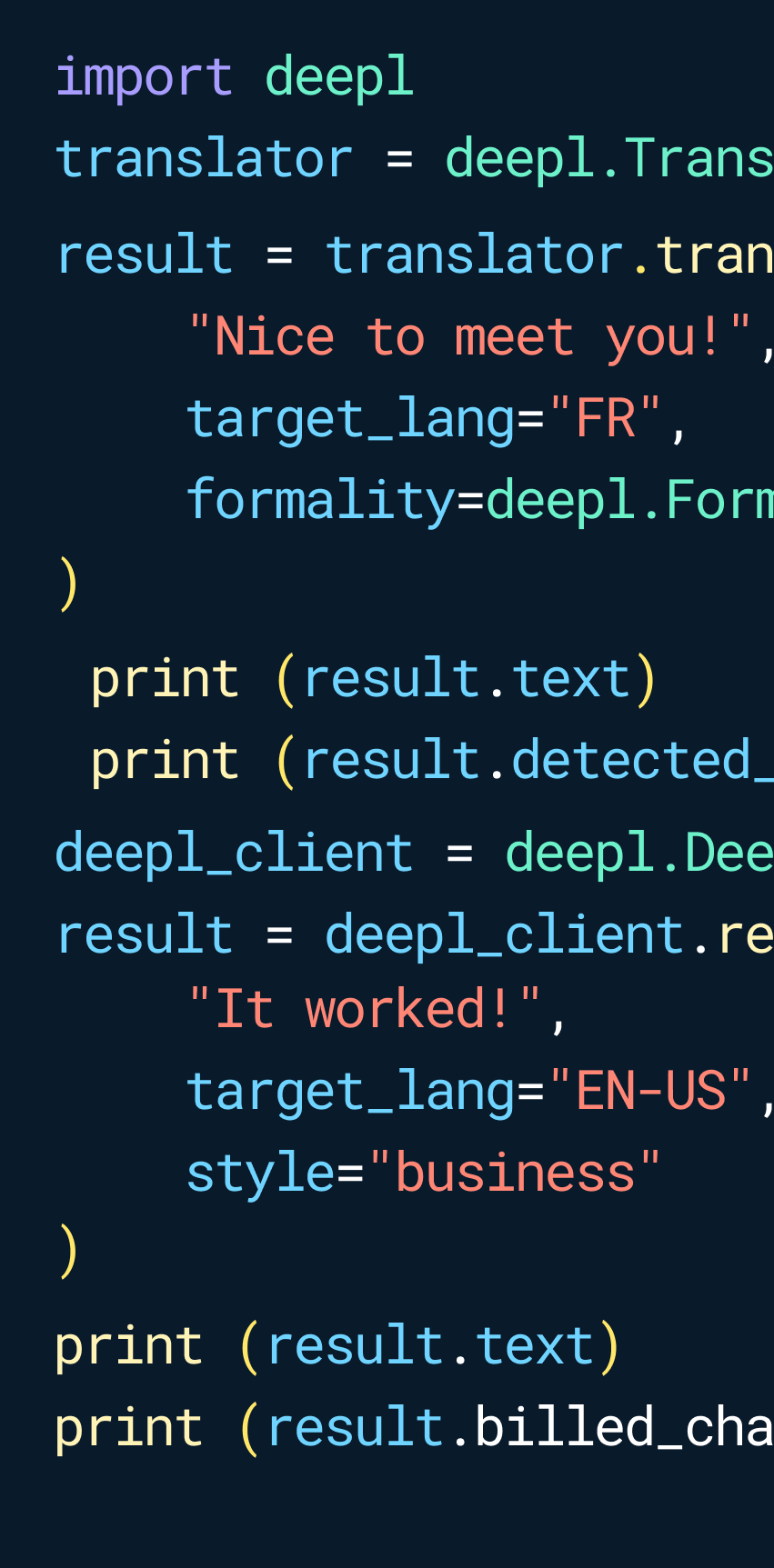
Confirm the official API contract
Review DeepL's current developer documentation for authentication, endpoint URLs, request parameters, supported languages, response formats, limits, and error handling. Pin the library version when using an official or third-party client.
Keep a short internal note linking each integration assumption to the current official documentation. This makes future upgrades easier to audit.
Protect authentication keys
Store production keys in a secret manager or server-side environment and restrict access to the smallest required runtime scope. Never embed a key in frontend code, mobile packages, documentation screenshots, or public logs.
Define rotation and revocation steps before launch. If a key is exposed, the team should know how to replace it without a long outage.
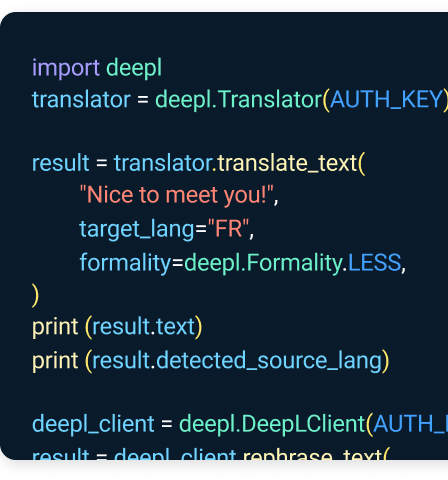
Validate and minimize requests
Reject empty, oversized, unsupported, or incorrectly encoded inputs before calling the API. Normalize language identifiers and document what happens when source-language detection is used.
Minimize sensitive content and avoid sending context that is not needed for the translation. Apply the terms and privacy requirements of the exact API plan.
Handle failures deliberately
Classify authentication, authorization, validation, quota, rate-limit, timeout, and server failures. Retry only temporary classes with bounded exponential backoff and jitter.
Use idempotency and job-state controls where repeated document processing could create duplicate work or unexpected usage.
Monitor usage and quality
Track status code class, latency, request volume, sanitized character volume, retry count, and downstream review outcomes. Do not log authorization headers or full sensitive source text.
Set alerts before account or operational limits become outages. Revisit costs using current official pricing and real usage data rather than a fixed estimate.
Plan fallback and incident response
Decide whether failures should queue work, return a clear error, use a reviewed alternate provider, or require human translation. Silent output substitution is risky when terminology or policy differs.
Document who owns provider incidents, privacy questions, key exposure, unexpected output, and billing anomalies. Test the fallback path before production traffic depends on it.